
The Confederation of Indian Industry and ASEAN on Monday set up two task forces in pharmaceuticals and agriculture and food processing to prepare a strategy document to outline a roadmap for cooperation in these sectors.

The prime minister was speaking at an event to mark golden jubilee of the Aditya Birla Group's presence in Thailand.

The upcoming round of talks, slated for October 11-12, is expected to be a stormy one.
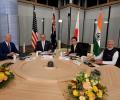
Saturday's Quad meeting in Delaware is taking place against the backdrop of China's assertive behaviour in the South China Sea, its sabre-rattling in the Taiwan Strait and increasing footprints in the Pacific and Indian Ocean, asserts Rup Narayan Das.

Among the current FTAs with significant trade deficits for India, five are with countries from the 10-nation Asean bloc. Exports to the 10 economies stood at $ 37.4 billion in 2018-19, up by 9% year on year. On the other hand, imports were higher at $ 59.31 billion, up by 25% from the previous year's $ 47.13 billion.
'It seems a wiser decision to pull out at the right moment than regret after joining the pact,' explains Dr Rahul Mishra.
India is likely to play a bigger role when the 10-member ASEAN and six other Asian nations meet in the backdrop of differences between China and Japan.
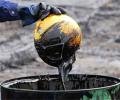
The Indian desire to deepen its ties with Vietnam, especially in the oil sector, besides defence and trade, was conveyed to the top leadership in Hanoi by External Affairs Minister Sushma Swaraj.
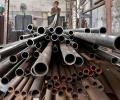
India's leading steel companies hope the Modi 3.0 Budget will continue the massive capital expenditure currently underway, focusing on infrastructure development, manufacturing, and fair trade. The infrastructure segment is the largest steel user, and the government's focus has fuelled steel consumption even as international markets have underperformed. According to provisional statistics, steel consumption grew 13.6 per cent in FY24, reaching 136 million tonnes (mt), according to a CRISIL report.
Terming India's ties with the ASEAN as a 'pillar' of its 'Look East' policy, Prime Minister Manmohan Singh on Wednesday proposed a bilateral trade target of $50 billion by 2010 and sought boosting of cooperation with the key ten-member grouping in technology, health care, climate change and tourism.
During the meeting, the external affairs minister highlighted the foreign policy aspects in the Common Minimum Programme of the United Progressive Alliance government.

These categories rank among India's top 10 export items by value.
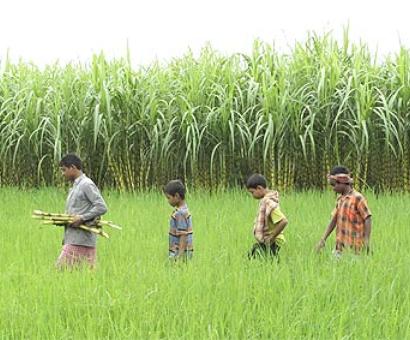
This accord marks the success of India's Look East Policy and is the first with a trading bloc.
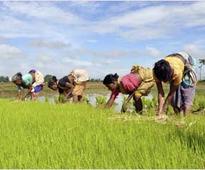
This accord marks the success of India's Look East Policy and is the first with a trading bloc.
The implementation of the ambitious India-Asean Free Trade Agreement is likely to miss the target date of January 1, 2009. Negotiators from both the countries had closed talks this August, after six years of painstaking dialogue.
With India and ASEAN making little progress on a proposed free trade pact, Prime Minister Manmohan Singh asked the 10-nation bloc on Tuesday to be "more reasonable" on sensitive farm products. "We are trying to persuade our ASEAN friends to be more reasonable and I am hopeful that this process will yield satisfactory outcome," Singh said.
The agenda prepared by ministers will be discussed by Prime Minister Narendra Modi and other RCEP leaders in Nonthaburi, a city north of Bangkok, on November 4, the official deadline to close talks.
India and South Korea have reached an agreement on civil nuclear cooperation.
According to the industry body, the 16-member RCEP has the potential to become one of the largest and economically dynamic trading blocs of the world, even bigger than the European Union.
Although the SARS outbreak had a 'moderate' effect on trade and investment flows between India and ASEAN countries, domestic industry could expect a spur in business in tourism, human resources, consultancy and food processing.

In a recent note, the global brokerage firm said India now commands a weight of 19 per cent in the above-mentioned portfolio as compared to 18.2 per cent in September 2023. India, it said, is a large liquid market and remains a counter-weight to North Asia if a slowdown in the West occurs and China's recovery disappoints.

India cannot afford to adopt any coercive measures against the military even if it disapproves the military takeover, notes Dr Rajaram Panda.
The investment chapter of the India-Korea agreement provides equal treatment to investors in the domestic market as also South Korean investors.
Prime Minister Manmohan Singh on Sunday left for Cambodia to attend the ASEAN and East Asia Summits which will provide an opportunity for India to enhance its economic cooperation against the backdrop of crisis in the western world.

India-Maldives ties came under strain under Yameen who was perceived to be close to China.
Substitute Bijen Singh's goal gave the Indian champions a 2-1 victory over Indonesia's Persita Tangerang \n\nin the quarter-finals.

Here's a look at how PM Modi's Malaysia visit unfolded.
'We are sure FY25 is going to be better...But to call out that all problems are behind us is a bit early.' 'The underlying business sentiment has not changed significantly.'
The government on Monday said that two-way trade between India and Association of South East Asian Nations had the potential to more than double to $30 billion in next three years but it was necessary to put in place a low tariff regime.

Without mentioning the boundary dispute, the spokesperson said that China-India relations have been stable on the whole and "our two sides have maintained dialogue and communication at various levels".
ASEAN's dialogue partners are -- Australia, China, the EU, Japan, New Zealand, South Korea, Russia and the US.
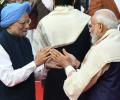
While Narendra Modi spent fewer days abroad than his predecessor -- 275 days versus Dr Singh's 306 - he has travelled more widely than any other Indian PM.
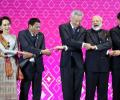
The Modi government has to embrace the history of Tamil conquests in South East Asia and stop obsessing about Babar/Humayun, argues Colonel Anil A Athale (retd).

While addressing the 14th ASEAN-India summit, the PM noted that growing radicalism and spread of extreme violence are the other security threats.

By changing the nation's name from India to Bharat, would this landmass overnight lose the emotional and cultural linkage that had been built over generations, centuries and millennia, asks N Sathiya Moorthy.

While Modi has spent fewer days abroad than his predecessor (270 days versus Dr Singh's 306), he has travelled more extensively and actively than any other Indian PM.
 © 2026 Rediff.com - Advertise with us - Disclaimer - Privacy Policy - Sitemap - Feedback - About us - Terms of use - Grievances